


 English
 한국어
 中文简体


Best Dye for Cotton: Expert Guide to Choosing the Right Dye for Perfect Color
The Short Answer: Fiber-Reactive Dye Is the Best Dye for Cotton
Fiber-reactive dye is the best dye for 100% cotton because it forms a permanent chemical bond with cotton fiber, producing the most washfast and fade-resistant color of any dye class available to home dyers and textile mills.
The reason is straightforward. Cotton is almost pure cellulose, and fiber-reactive dyes are engineered to react with the hydroxyl groups in cellulose. The dye becomes part of the fiber's molecular structure. It does not sit on the surface, so it will not rub off, wash out, or fade after a few laundry cycles the way many other dyes do.
Best depends on the project. For a T-shirt you will wear 50 times, permanent color matters more than convenience. For a one-off craft project, an easier dye may be acceptable. For activewear or a garment washed constantly, fiber-reactive is the only dye class that makes sense.
In our own dyehouse, reactive dyes are the default for cotton knits because they deliver repeatable shades on large batches. Whether you dye one T-shirt at the kitchen sink or a 500-kilogram roll of single jersey, the same chemistry determines the result. If the fiber is a plant fiber, choose fiber-reactive.
What Makes Cotton Different From Other Fibers
Cotton is a cellulose fiber with a chemical structure full of hydroxyl (OH) groups. These groups act as reaction sites where dye molecules can attach and form a stable bond.
Protein fibers such as wool and silk respond to acid dyes. Polyester, a plastic-based fiber, has no available reaction sites at room temperature and needs high-heat disperse dyeing. Cotton sits in its own category.
When a fiber-reactive dye meets cotton in an alkaline bath, the reactive group of the dye bonds with the hydroxyl group of the cellulose. The result is a single molecule of dyed fiber. Direct dyes, by contrast, settle into the fiber's surface and are held by weaker forces, which is why they fade with repeated washing.
If you dye a cotton blend, the non-cotton portion matters. Blends with more than about 20 percent polyester will show the cotton as dyed and the polyester as undyed, producing a heathered effect. For an even solid shade on a cotton/polyester blend, you must use both reactive and disperse dyes in separate steps.
How to Choose Between Dye Types for Cotton
The table below compares the most common dye categories you will find on retail shelves or in textile supply catalogs.
| Dye Type | Cotton Compatibility | Colorfastness | Ease of Use | Best Application |
|---|---|---|---|---|
| Fiber-Reactive | Excellent | Excellent, permanent bond | Moderate; requires alkali and salt | Long-wear garments, towels, home use |
| Direct Dye | Good | Fair to good, fades over time | Very easy; hot water bath only | Classroom crafts and low-wear projects |
| All-Purpose Dye | Fair | Fair, some fading on wash | Easy; good for small home batches | Quick crafts and tinting |
| Vat Dye | Excellent | Excellent, high lightfastness | Difficult; requires special chemicals | Denim and heavy workwear |
Fiber-reactive dyes give you the best balance of colorfastness and practical effort. Vat dyes are also excellent but involve more complex chemistry and are normally reserved for indigo and denim production. Direct dyes are easy to find and simple to use, but they are rarely acceptable for garments that must hold their color through years of washing.
A Practical Dyeing Process for Cotton
The steps below apply whether you are dyeing a single garment at home or a full production batch. Fabric preparation matters as much as the dye itself.
- Pre-scour the cotton. Cotton carries natural waxes, pectins, and spinning oils that block dye penetration. Scour with a textile detergent and, optionally, a small amount of soda ash at 60 to 80 degrees Celsius for 30 minutes. This leaves the fiber clean and receptive.
- Prepare the dye bath. Dissolve fiber-reactive dye in warm water. For a medium shade, use about 1 to 3 percent of dye on the weight of fabric (owf). Lower percentages give pastels; higher percentages move toward deep shades.
- Add salt. Electrolyte drives dye molecules out of the water and onto the fiber. Many recipes call for 30 to 50 grams of salt per 100 grams of fabric. Salt pushes the dye into the cellulose.
- Add soda ash to fix the dye. The alkali raises the pH and triggers the bond between the dye and the cotton. This is the key step that makes reactive dyes permanent.
- Rinse and wash. Remove unfixed dye with cold water, then hot water. A proper after-wash is critical because cotton can hold mechanically bound dye that will bleed later if you skip this stage.
The most common mistakes in home dyeing are skipping the pre-scour and using too little salt. Both lead to uneven color, and the dyer often blames the dye when the real problem is the process. In production, we test every batch in a lab to confirm the shade and washfastness before cutting.
Cold-Water vs. Warm-Water Reactive Dyes
Fiber-reactive dyes are available in cold-water and warm-water forms. Cold-water systems react at room temperature, while warm-water systems need around 60 degrees Celsius and are common in textile mills because they offer better economy on dense heavy fabrics.
Cold-water dyeing is the easiest for beginners. You do not need a stove, and the process is forgiving of timing errors. The tradeoff is speed: cold-water reactions can take 4 to 12 hours to reach full exhaustion.
Warm-water dyeing is faster and more suited to heavy cotton or tight knit structures that need deep dye penetration. In production, the choice depends on your equipment and the fabric weight you want to dye.
Fabric Construction Changes the Dyeing Result
The same reactive dye can look different depending on the knit structure. A smooth compact surface, a looped terry surface, and a textured pique surface each take dye differently. Understanding these differences helps you plan shade and dye quantity.
- 100% cotton single jersey is the classic fabric for T-shirts and lightweight tops. It is smooth, gives bright uniform color, and takes fiber-reactive chemistry evenly. Our 100% cotton single jersey
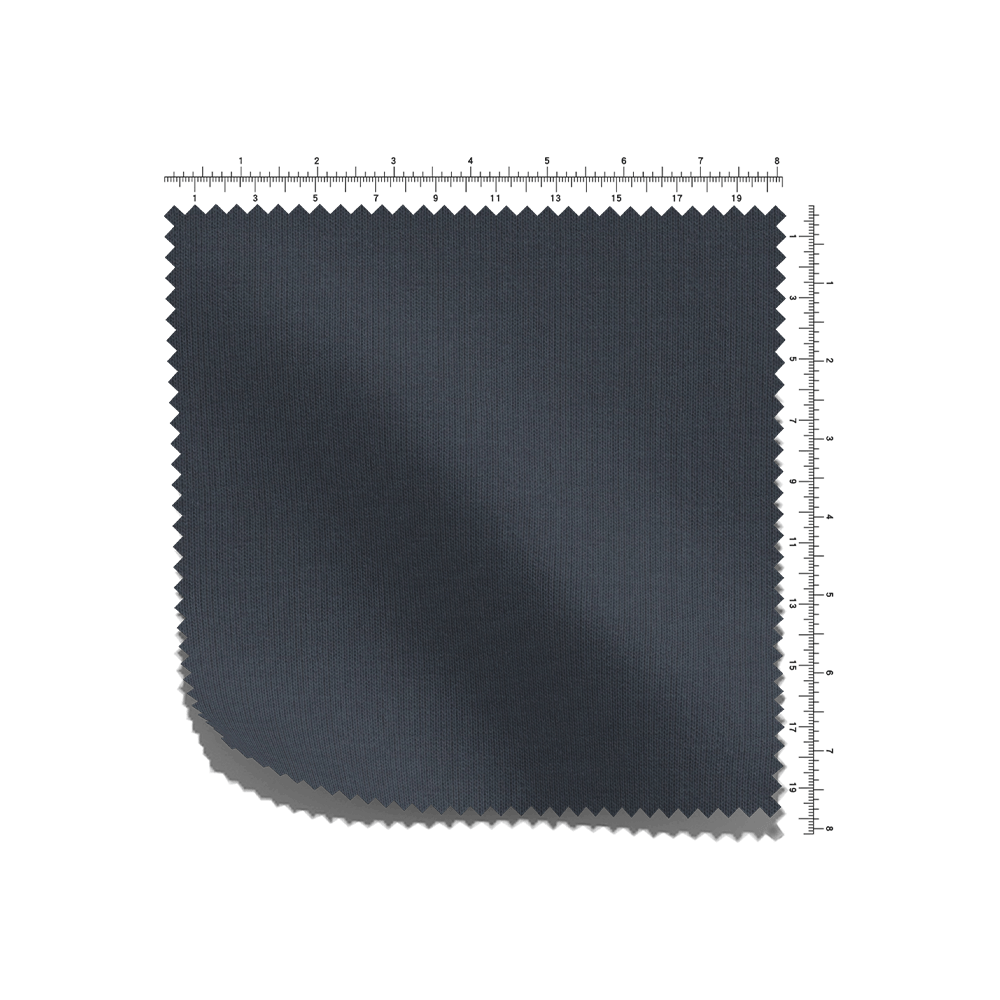 Cotton-Polyester Single Jersey Fabric for Business T-ShirtsThis 55% cotton, 45% polyester jersey uses a cotton-covered knitting method, offering a smooth surface, wrinkle resistance, and breathability. Enzyme-finished for a cleaner feel, it suits business T-shirts and will dye differently than pique due to its compact structure.View Product → is one of the most versatile bases for custom-dyed garments.
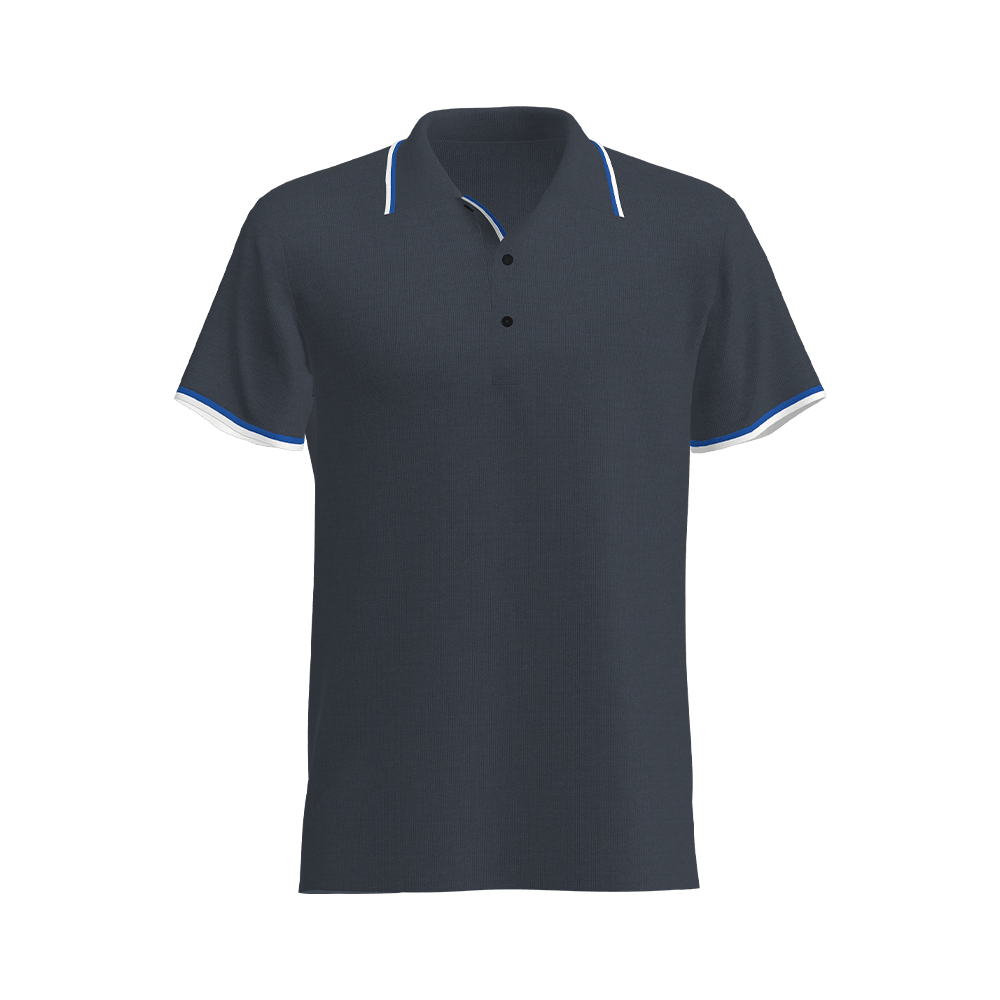
- Cotton pique has a textured surface that creates a dimensional look after dyeing. It is widely used for polo shirts. The raised structure affects how light reflects, so the same shade can appear deeper than it does on a flat knit. Our cotton pique fabric
 All-Cotton Pique Knit Fabric for Polo ShirtsMade from 21S all-cotton yarn, this pique requires no dyeing, reducing production steps and environmental impact. It provides stiffness, wrinkle resistance, and comfort, ideal for polo shirts. Its textured surface affects dye uptake, important for shade planning.View Product → takes dye consistently and holds its structure after washing.
- Cotton terry consists of loops on one or both sides, which makes it the standard for towels and washcloths. The loops absorb more dye than a flat knit does, so you need a little extra dye for full even coverage. Our cotton terry fabric is a good example of a dense loop construction that requires that extra dye.
If you are comparing these constructions for a new collection, review the structural differences between single jersey, pique, and double-knit fabrics to see how each will behave in your dyeing process. Read our guide to single jersey vs. pique vs. double-knit fabrics.
How to Evaluate Colorfastness and Quality
In the textile industry, we evaluate dyed cotton with standard tests. A typical protocol includes a washfastness test at 40 or 60 degrees Celsius, a crocking test for dry and wet rubbing, and a lightfastness test under controlled UV exposure. For export apparel, the standard is usually a Grade 3 to 4 rating on a 1 to 5 scale.
Before shipment, check pH, shade reproducibility, and dye exhaustion. If too much dye stays in the bath, the chemical balance or time was wrong. Dye that is not fixed properly may look fine on the roll but bleed later, creating returns and customer complaints.
Dye concentration also affects the result. At 0.5 percent owf, you get a pale tint. At 3 percent owf, you reach a deep shade. Above 5 percent, the extra dye will not fix properly, and the excess can cause crocking. For pastel garments, many mills use 0.3 to 0.8 percent and rely on lighter fabric structures.
Quick Answers to Common Cotton Dyeing Questions
Q1: Can I dye cotton with food coloring?
No. Food coloring is not a textile dye. It will stain cotton temporarily but will wash out on the first rinse because it does not bond with the fiber.
Q2: How long does fiber-reactive dye last on cotton?
When applied correctly with soda ash and salt, and followed by a proper rinse, a fiber-reactive dye can remain stable for years. The main causes of fading are repeated exposure to strong sunlight and aggressive washing conditions.
Q3: What is the best dye for a cotton-polyester blend?
For the cotton component, use a fiber-reactive dye. If you need a truly solid shade on a blend with more than 20 percent polyester, use a separate disperse dye process for the polyester portion. For casual wear with a heathered look, the fiber-reactive dye alone is enough.
Q4: Should I bleach cotton before dyeing?
Only if the cotton is already dyed. Bleaching removes existing color and gives a more uniform base. For natural greige cotton, a careful pre-scour is enough.
Don't hesitate to contact when you need us!

Step Ahead.
Nearly 30 years of experience in the textile industry is a valuable advantage of Golden Morning. Welcome to communicate with our team!
Become a Client
 +86-512-52528088
 +86-512-14546515
-
 [email protected]
[email protected] -

Company Address:
NO.218 QingDunTang Road changshu CityJiangsu Province(215500), ChinaFactory Address:
NO.19 Fuchunjiang East Road Southeast Economic Development Zone Changshu Jiangsu, China
