


 English
 한국어
한국어 中文简体
中文简体
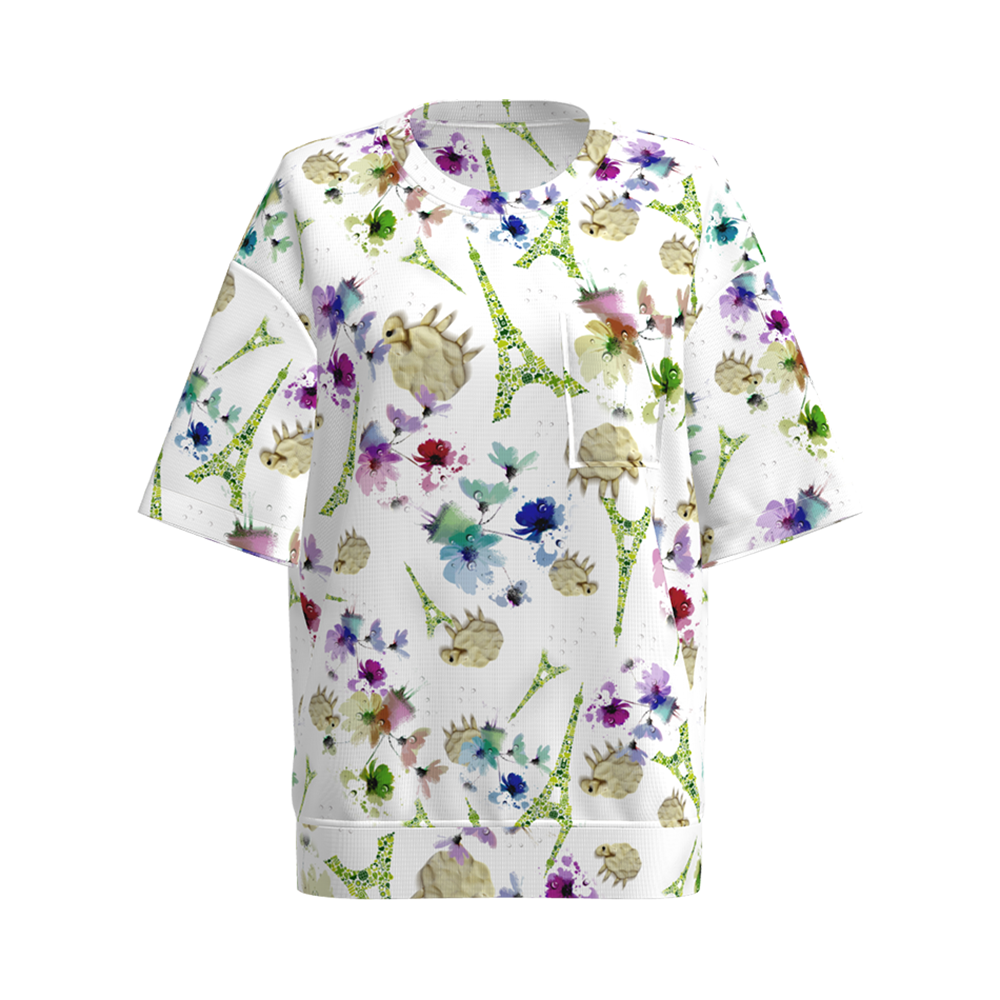
How do Pigment vs Reactive Inks Perform on Cotton Jersey?
Digital textile printing has evolved into a critical process for producing R/S Digital Print Single Jersey Fabric, enabling high levels of customization, reduced inventory, and enhanced design flexibility. Among the various ink systems employed, pigment inks and reactive inks represent two primary approaches for printing on cotton jersey fabrics. Understanding the performance characteristics, limitations, and engineering requirements of these inks is essential for designing reliable, high-quality printing systems.
1. Fundamental Ink Characteristics
1.1 Pigment Inks
Pigment inks are composed of solid color particles dispersed in a liquid carrier. On cotton jersey fabrics, pigments generally sit on the surface of fibers rather than forming chemical bonds. This characteristic has multiple implications:
- Color saturation: Pigments rely on particle density and binding agents; they often produce slightly muted colors compared to reactive inks.
- Surface adherence: Pigments require binders and fixation processes (thermal or chemical) to remain adhered during washing and abrasion.
- Environmental sensitivity: Pigments exhibit lower sensitivity to pH and water hardness variations during processing, providing more consistent results across different production environments.
1.2 Reactive Inks
Reactive inks differ fundamentally as they contain colorants capable of forming covalent bonds with cellulose fibers in cotton. This bonding provides distinct performance characteristics:
- High color saturation: Covalent attachment ensures vibrant, deeply embedded colors.
- Excellent wash fastness: Once bonded, the pigments remain highly resistant to water, detergents, and mechanical abrasion.
- Process sensitivity: Reactive inks require precise pH control, temperature regulation, and fixation timing to achieve optimal results. Any deviations can result in color unevenness or incomplete fixation.
2. Fabric Interaction
2.1 Absorption and Penetration
Cotton jersey, especially R/S Digital Print Single Jersey Fabric, has a unique knitted structure:
- Single jersey knit: Looser loop formation allows increased ink penetration.
- Fiber density and porosity: Higher porosity facilitates pigment deposition on the surface, whereas reactive inks penetrate fibers more efficiently for chemical bonding.
Table 1: Penetration Behavior of Pigment vs Reactive Inks on Cotton Jersey
| Ink Type | Fiber Interaction | Penetration Depth | Surface Appearance | Implications for Print |
|---|---|---|---|---|
| Pigment | Physical adherence | Low | Slightly textured | Requires binder and curing |
| Reactive | Chemical bonding | High | Smooth, vibrant | Requires precise pre-treatment |
2.2 Pre-Treatment Requirements
Effective printing on R/S Digital Print Single Jersey Fabric necessitates pre-treatment, differing by ink type:
- Pigment inks: Typically need minimal pre-treatment; most modern systems apply a generic binder-coating solution.
- Reactive inks: Pre-treatment often involves alkaline solutions to optimize fiber reactivity. Over- or under-treatment can lead to uneven fixation, affecting color uniformity.
3. Colorfastness and Durability
3.1 Wash Fastness
- Pigment inks: Moderate wash fastness. Retention depends heavily on binder type, curing temperature, and mechanical agitation during laundering.
- Reactive inks: Excellent wash fastness due to covalent bonding. Longevity is less dependent on binder systems.
3.2 Light and Abrasion Resistance
- Pigment inks: Generally exhibit good light fastness if high-quality pigments are used. Abrasion resistance depends on binder adhesion.
- Reactive inks: Light fastness is generally superior. Abrasion resistance is inherent due to fiber penetration, but it may slightly reduce fabric hand feel if over-saturated.
Table 2: Comparative Performance Metrics
| Performance Metric | Pigment Ink | Reactive Ink | Notes |
|---|---|---|---|
| Color Saturation | Medium | High | Reactive inks produce deeper hues |
| Wash Fastness | Moderate | Excellent | Pigments rely on binder adhesion |
| Abrasion Resistance | Moderate | High | Fiber penetration improves durability |
| Process Sensitivity | Low | High | Reactive inks require precise control |
| Environmental Tolerance | High | Moderate | Pigments tolerate pH and water variations |
4. Process Considerations
4.1 Ink Delivery and Printing Equipment
- Pigment inks: Compatible with a wider range of printer types. Viscosity is less critical, and equipment calibration is simpler.
- Reactive inks: Require precise temperature-controlled nozzles and strict humidity management to prevent premature reactions or nozzle clogging.
4.2 Curing and Fixation
- Pigment inks: Thermal curing (140–180°C) or UV curing depending on binder chemistry. Over-curing may stiffen the fabric.
- Reactive inks: Typically require steaming or wet-heat fixation at controlled temperatures. Fixation timing is crucial; under-fixation leads to poor wash fastness, while over-fixation can damage fiber elasticity.
4.3 Environmental and Resource Efficiency
- Pigment inks: Lower water consumption since minimal washing is needed post-printing.
- Reactive inks: Higher water use during post-fixation washing to remove unreacted dye. However, optimized systems can recycle water and reduce effluent load.
5. System Integration and Production Workflow
5.1 Pre-Treatment Integration
For R/S Digital Print Single Jersey Fabric, an effective system must incorporate:
- Pre-treatment applicator: Uniform chemical application ensures consistent reactivity or binder adhesion.
- Drying or conditioning units: Essential for pigments to adhere or reactive inks to prepare fibers.
- Environmental controls: Humidity and temperature regulation are crucial for reactive inks, less critical for pigment inks.
5.2 Printing and Quality Control
- Inline sensors: Monitor deposition, alignment, and color consistency.
- Ink management systems: Ensure minimal waste and precise pigment/reactive ratios.
- Real-time feedback loops: Correct color density variations, particularly critical for reactive ink systems.
5.3 Post-Processing and Fixation
- Pigment-based processes emphasize thermal curing and binder cross-linking.
- Reactive-based systems focus on chemical bonding and washing for unreacted dye removal.
Integration Strategy: A modular approach allows switching between pigment and reactive inks without major equipment changes, which is vital for production flexibility.
6. Cost and Operational Considerations
- Pigment inks: Generally lower cost and more forgiving operational parameters. Reduced water usage lowers environmental compliance costs.
- Reactive inks: Higher operational costs due to precise process control, water-intensive fixation, and specialized pre-treatment chemicals. However, the improved durability can reduce long-term product returns or complaints.
Table 3: Operational Comparison
| Factor | Pigment Ink | Reactive Ink | Engineering Implication |
|---|---|---|---|
| Material Cost | Moderate | Higher | Budget allocation must account for ink cost |
| Energy Consumption | Lower | Moderate-High | Reactive inks require controlled fixation |
| Process Complexity | Low | High | Reactive inks need stricter control |
| Waste and Environmental Load | Low | Higher | Water recycling and effluent management needed |
| Maintenance Requirements | Moderate | High | Reactive systems require precise calibration |
7. Key Performance Optimization Strategies
-
For Pigment Inks:
- Ensure uniform pre-treatment application to improve binder adhesion.
- Optimize curing temperature and duration to avoid fabric stiffness.
- Use inline quality monitoring to detect binder migration or color inconsistency.
-
For Reactive Inks:
- Strict pH and temperature control in pre-treatment and fixation.
- Implement steaming and washing cycles precisely to avoid under- or over-fixation.
- Control humidity in the printing environment to prevent premature chemical reactions.
-
System-Wide Strategies:
- Modular ink management allows quick transition between ink types.
- Real-time feedback loops and sensors reduce human error and increase production consistency.
- Environmental monitoring ensures compliance with water and energy usage regulations.
8. Summary
Pigment inks provide a robust, flexible solution for printing on R/S Digital Print Single Jersey Fabric, requiring less process control and offering lower operational costs, albeit with moderate colorfastness and durability. In contrast, reactive inks deliver vibrant colors and superior wash and abrasion resistance, but demand precise process control, higher water and energy consumption, and more complex system integration.
From a system-engineering perspective, the choice between pigment and reactive inks must consider fabric characteristics, production flexibility, environmental management, and end-use performance. Integrating modular pre-treatment, precise environmental control, and real-time monitoring allows manufacturers to optimize performance across both ink types, achieving consistent quality while maintaining operational efficiency.
FAQ
Q1: Can pigment inks achieve the same color vibrancy as reactive inks on cotton jersey?
A1: Pigment inks generally produce slightly muted colors compared to reactive inks, as they adhere physically rather than chemically. Proper binder selection and curing can enhance vibrancy.
Q2: Do reactive inks require post-wash processing?
A2: Yes, reactive inks require washing to remove unreacted dyes, which improves wash fastness and prevents color bleeding.
Q3: Which ink type is more suitable for short-run custom prints?
A3: Pigment inks are typically more forgiving for short runs, as they require less pre-treatment and process control.
Q4: How does fabric elasticity affect ink performance?
A4: High stretch in single jersey fabrics can cause pigment cracking if not cured properly. Reactive inks bond chemically, offering better elasticity and compliance.
Q5: Are there environmental trade-offs between pigment and reactive inks?
A5: Pigment inks generally consume less water and energy, while reactive inks involve water-intensive washing and stricter fixation controls.
References
- K. Holme, Digital Textile Printing: Materials, Technologies, and Systems, Textile Engineering Journal, 2023.
- S. Patel, Ink-Fiber Interaction in Cotton Jersey Fabrics, Journal of Textile Science, 2022.
- J. Liu, System Integration for Digital Textile Production, International Textile Review, 2024.
LATEST POST
Let’s create something amazing together
contact us
Don't hesitate to contact when you need us!

Step Ahead.
Nearly 30 years of experience in the textile industry is a valuable advantage of Golden Morning. Welcome to communicate with our team!
Become a Client
 +86-512-52528088
 +86-512-14546515
-
 [email protected]
[email protected]
[email protected] -

Company Address:
NO.218 QingDunTang Road changshu CityJiangsu Province(215500), ChinaFactory Address:
NO.19 Fuchunjiang East Road Southeast Economic Development Zone Changshu Jiangsu, China
