


 English
 한국어
한국어 中文简体
中文简体
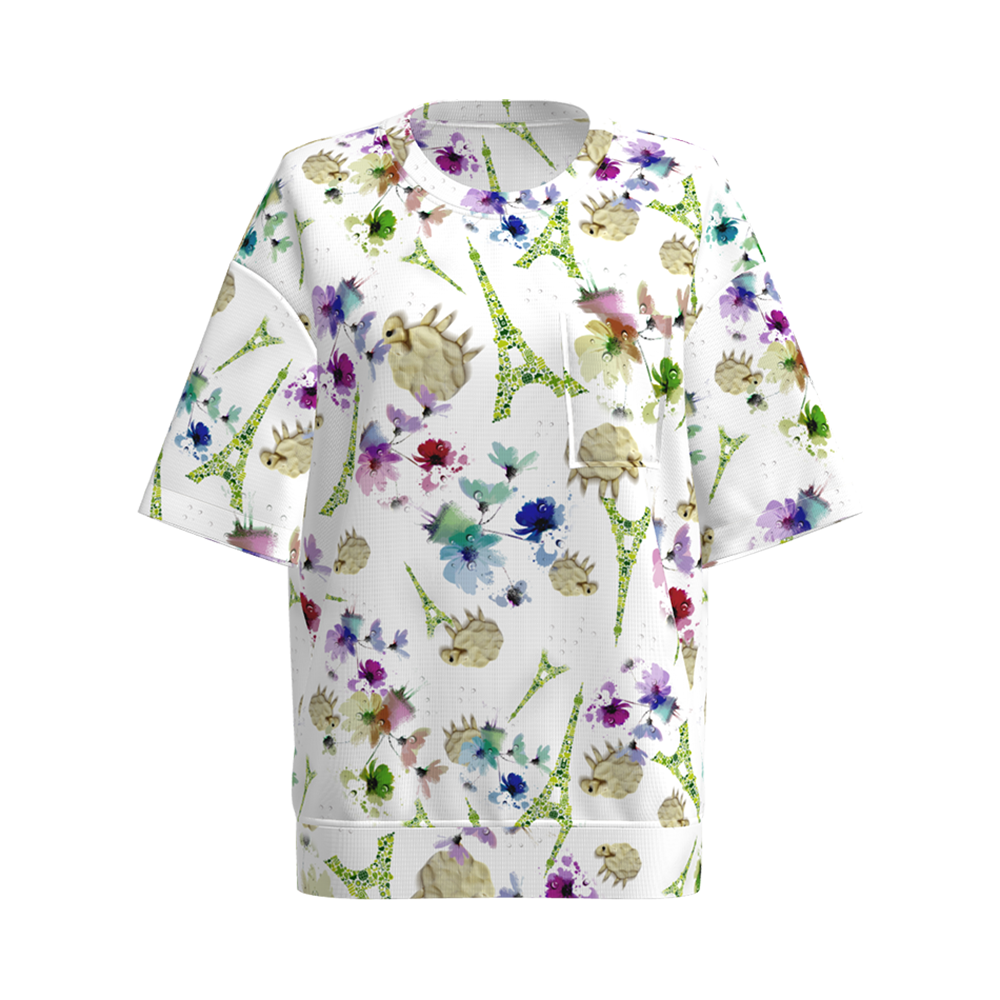
How does R/S Digital Print Single Jersey Fabric perform under high-speed digital printing machines?
R/S digital print single jersey fabric has become increasingly prominent in the textile industry due to its versatility, softness, and adaptability to modern printing technologies. As fashion and apparel manufacturers demand higher efficiency and shorter production cycles, understanding how R/S digital print single jersey fabric performs under high-speed digital printing machines has become critical.
R/S digital print single jersey fabric is widely used in various segments, including casual wear, sportswear, and promotional apparel. Its popularity is driven by its smooth surface, excellent elasticity, and ability to hold intricate printed designs with clarity. However, to achieve consistent results in high-speed printing, manufacturers must be aware of several technical and operational factors.
Characteristics of R/S Digital Print Single Jersey Fabric
Fabric Structure and Composition
R/S digital print single jersey fabric is a knit material with a simple interlooping structure, which gives it natural elasticity and a soft hand feel. The fabric is typically composed of cotton, polyester, or a blend of fibers, depending on the desired performance characteristics. Cotton-based R/S digital print single jersey fabric offers breathability and moisture absorption, making it ideal for casual and sportswear applications. Polyester blends, on the other hand, improve dimensional stability and increase resistance to shrinkage during washing.
The fabric’s knit density and fiber count are essential parameters affecting its performance under digital printing. A higher knit density provides a smoother surface, which enhances print sharpness and reduces ink penetration issues. Lower-density fabrics may allow for faster ink absorption but risk uneven prints, particularly under high-speed printing conditions.
Surface Quality and Print Compatibility
The surface texture of R/S digital print single jersey fabric plays a crucial role in high-speed digital printing. A smooth and uniform surface ensures even ink distribution and reduces the risk of blotching or color inconsistencies. Additionally, fabrics with a tight knit structure allow digital printers to produce high-resolution patterns, including detailed geometric designs and gradients.
Pre-treatment of the fabric, such as pre-coating with a polymer or heat-setting, can enhance the printability of R/S digital print single jersey fabric. These treatments stabilize the fiber surface, minimize puckering during printing, and improve color retention. Manufacturers often choose pre-treated fabrics to maintain quality in continuous high-speed production runs.
High-Speed Digital Printing and R/S Digital Print Single Jersey Fabric
Digital Printing Technology Overview
High-speed digital printing machines are designed to handle large production volumes efficiently while maintaining color accuracy and resolution. These machines typically use inkjet technology with fast-drying inks formulated for textile applications. The performance of R/S digital print single jersey fabric on these machines depends on several factors, including fabric composition, surface smoothness, and pre-treatment.
Digital printing offers several advantages over traditional printing methods, such as screen printing. It enables rapid design changes, shorter lead times, and the production of small batches with complex patterns. However, achieving consistent results on R/S digital print single jersey fabric at high speeds requires careful control of fabric tension, ink saturation, and drying conditions.
Fabric Tension and Feeding
Proper tension control is essential for high-speed digital printing on R/S digital print single jersey fabric. Excessive tension can distort the knit structure, causing misalignment of printed patterns, while insufficient tension may result in fabric wrinkling or uneven feeding. Modern digital printing machines are equipped with automated tension management systems that adjust the fabric feed dynamically to maintain uniformity throughout the printing process.
Additionally, feeding the fabric at a consistent speed is crucial. Variations in feeding rate can affect ink deposition, leading to color inconsistencies or blurred edges. Manufacturers must calibrate feeding mechanisms based on the fabric’s elasticity and thickness to ensure stable high-speed printing performance.
Ink Absorption and Color Retention
R/S digital print single jersey fabric’s absorption characteristics determine how inks adhere to its surface and how vibrant the final colors appear. Cotton-rich fabrics generally absorb inks quickly, which can improve print brightness but may also require precise control to prevent bleeding. Polyester or blended fabrics may have slower absorption, necessitating pre-treatment to achieve uniform ink penetration.
High-speed digital printing introduces challenges in color retention. Rapid ink application can sometimes exceed the fabric’s absorption capacity, causing smudging or incomplete drying. Heat-setting and curing processes are therefore critical to locking the color onto the fibers and ensuring long-lasting print quality. Manufacturers often conduct sample runs to determine the optimal combination of speed, ink saturation, and curing temperature.
Quality Considerations for High-Speed Printing
Consistency and Reproducibility
One of the main challenges in high-speed digital printing on R/S digital print single jersey fabric is maintaining consistency across large production runs. Even minor variations in fabric thickness, fiber composition, or pre-treatment can affect the final print. Quality control measures such as inline inspection systems and colorimetric analysis help manufacturers identify defects early and adjust machine settings in real time.
Handling Fabric Defects
Defects in R/S digital print single jersey fabric, such as snags, holes, or uneven knitting, can disrupt printing at high speeds. These imperfections may result in ink pooling or incomplete patterns. Pre-production inspection and selective cutting of defective sections are standard practices to minimize print waste. Additionally, automated detection systems can flag areas of the fabric with irregularities before printing begins.
Drying and Curing
After ink application, R/S digital print single jersey fabric must undergo drying or curing to fix the colors. High-speed digital printing machines often integrate fast-drying systems using heated rollers or infrared radiation. The drying process must be carefully calibrated to avoid overheating, which can distort the fabric or reduce elasticity, while ensuring that the ink is fully cured to prevent fading during washing.
Post-Printing Treatments
To enhance the durability of prints on R/S digital print single jersey fabric, post-printing treatments such as softening, washing, or heat-setting are applied. These processes help maintain fabric hand feel and reduce stiffness caused by inks. They also improve colorfastness, ensuring that patterns remain vibrant through multiple wash cycles.
Operational Efficiency and Cost Considerations
Production Speed vs. Quality
High-speed digital printing machines enable large-scale production, but there is often a trade-off between speed and print quality. While R/S digital print single jersey fabric can withstand rapid printing, manufacturers must balance machine speed with ink saturation, curing time, and fabric handling to avoid defects. In practice, moderate speed adjustments can significantly enhance print clarity and reduce waste.
Waste Management and Sustainability
Efficient handling of R/S digital print single jersey fabric reduces material waste and operational costs. Waste may arise from fabric misfeeds, ink oversaturation, or defective sections. Implementing automated fabric guides, inline quality inspection, and pre-treatment protocols minimizes waste and contributes to more sustainable production practices. Manufacturers increasingly prioritize sustainability to meet consumer demand for eco-friendly textiles.
Cost Implications
The cost of producing R/S digital print single jersey fabric with high-speed digital printing depends on several factors, including fiber composition, pre-treatment, ink consumption, and energy usage during drying. Cotton-rich fabrics may require additional ink and heat-setting time, while polyester blends can reduce printing defects and speed up production. Buyers often weigh these cost factors against design complexity and volume requirements when selecting R/S digital print single jersey fabric suppliers.
Applications of R/S Digital Print Single Jersey Fabric
R/S digital print single jersey fabric is widely used across multiple sectors due to its adaptability and high-quality print performance. Common applications include:
- Casual apparel: T-shirts, hoodies, and dresses benefit from the fabric’s soft hand feel and elasticity.
- Sportswear: Its breathability and ability to retain vivid patterns make it suitable for athletic wear.
- Promotional products: R/S digital print single jersey fabric is ideal for limited-edition merchandise requiring high-resolution designs.
- Home textiles: Pillow covers, bed sheets, and other decorative items take advantage of the fabric’s smooth surface and color retention.
The ability to produce complex patterns with high-speed digital printing machines allows manufacturers to cater to niche markets and respond rapidly to consumer trends.
Challenges and Best Practices
Challenges
Despite its advantages, working with R/S digital print single jersey fabric under high-speed digital printing conditions presents several challenges:
- Maintaining consistent tension and feed across long production runs.
- Preventing ink smudging or bleeding on cotton-rich fabrics.
- Ensuring even curing and drying without damaging fabric elasticity.
- Detecting and correcting minor defects in real time to avoid large-scale waste.
Best Practices
To optimize performance, manufacturers should adopt best practices including:
- Pre-treating the fabric for enhanced ink adhesion.
- Calibrating machine settings based on fabric composition and thickness.
- Implementing inline inspection systems for continuous quality monitoring.
- Conducting sample runs to determine the optimal balance between speed, ink saturation, and curing parameters.
- Applying post-printing treatments to maintain fabric softness and print durability.
Conclusion
R/S digital print single jersey fabric demonstrates excellent performance under high-speed digital printing machines when properly managed. Its unique combination of softness, elasticity, and surface uniformity allows manufacturers to produce high-resolution patterns efficiently, catering to various markets from fashion to promotional textiles.
However, achieving consistent, high-quality results requires careful attention to fabric characteristics, pre-treatment, ink application, tension control, and post-printing processes. By following best practices and leveraging modern digital printing technology, manufacturers can optimize production efficiency, minimize defects, and deliver premium-quality products to buyers.
The continued evolution of high-speed digital printing technology, combined with the versatility of R/S digital print single jersey fabric, ensures that it remains a preferred choice for innovative textile solutions, balancing quality, efficiency, and market responsiveness.


Don't hesitate to contact when you need us!

Step Ahead.
Nearly 30 years of experience in the textile industry is a valuable advantage of Golden Morning. Welcome to communicate with our team!
Become a Client
 +86-512-52528088
 +86-512-14546515
-
 [email protected]
[email protected]
[email protected] -

Company Address:
NO.218 QingDunTang Road changshu CityJiangsu Province(215500), ChinaFactory Address:
NO.19 Fuchunjiang East Road Southeast Economic Development Zone Changshu Jiangsu, China
