


 English
 한국어
 中文简体

Latest trends in functional fabrics: Practical Applications, Selection, Performance
A cooling single jersey that reads 0.16 W/cm² on a contact-cool test can still disappoint on the shelf if the finish washes out by the twentieth home laundry. That gap between the lab number and the laundry room is the fastest filter for judging which functional fabric trends are worth building a season around.
The conclusion first: for the 2026-2027 cycle, five shifts matter. Cooling and wicking have merged into one comfort specification. Bio-based and recycled content has moved from brand storytelling to a documented purchase requirement. Warmth is engineered through structure and infrared additives rather than added weight. Hygiene, UV and water protection are bundled into a single substrate instead of stacked as separate layers. And every water-repellent finish now has to perform without intentionally added PFAS.
Trend 1: Cooling and Wicking Have Merged Into One Specification
Three seasons ago a brief asked for quick-dry or cool touch. Today it asks for both, plus a wash-durability clause, because consumers judge comfort in the first thirty seconds of wear and again after a week of use.
Contact cooling is expressed as Qmax, the peak heat flow when skin meets fabric. Touch-cool methods such as GB/T 35263 and JIS L 1927 dominate Asian sourcing, and most buyers set a floor of roughly 0.13 to 0.15 W/cm² on the finished, dyed fabric. Wicking and drying sit on a separate test set: moisture management and absorption methods such as AATCC 195 and AATCC 79, plus a drying-rate method agreed with the mill.
Write both values into the specification on finished fabric after a defined number of home launderings, not on greige or pre-finish samples. Twenty washes is the most common clause; thirty is appearing on premium programmes.
Most rejected submissions fail on finish interference rather than fibre choice. A softener added for hand feel can cut wicking spread time, and a stain-release treatment will slow absorption even when Qmax still passes. For structure, cooling favours open lightweight knits while wicking favours a two-faced construction that moves moisture from the inner to the outer face; a cooling French terry or a fine single jersey built on modified cross-section yarn usually covers both at a workable weight.
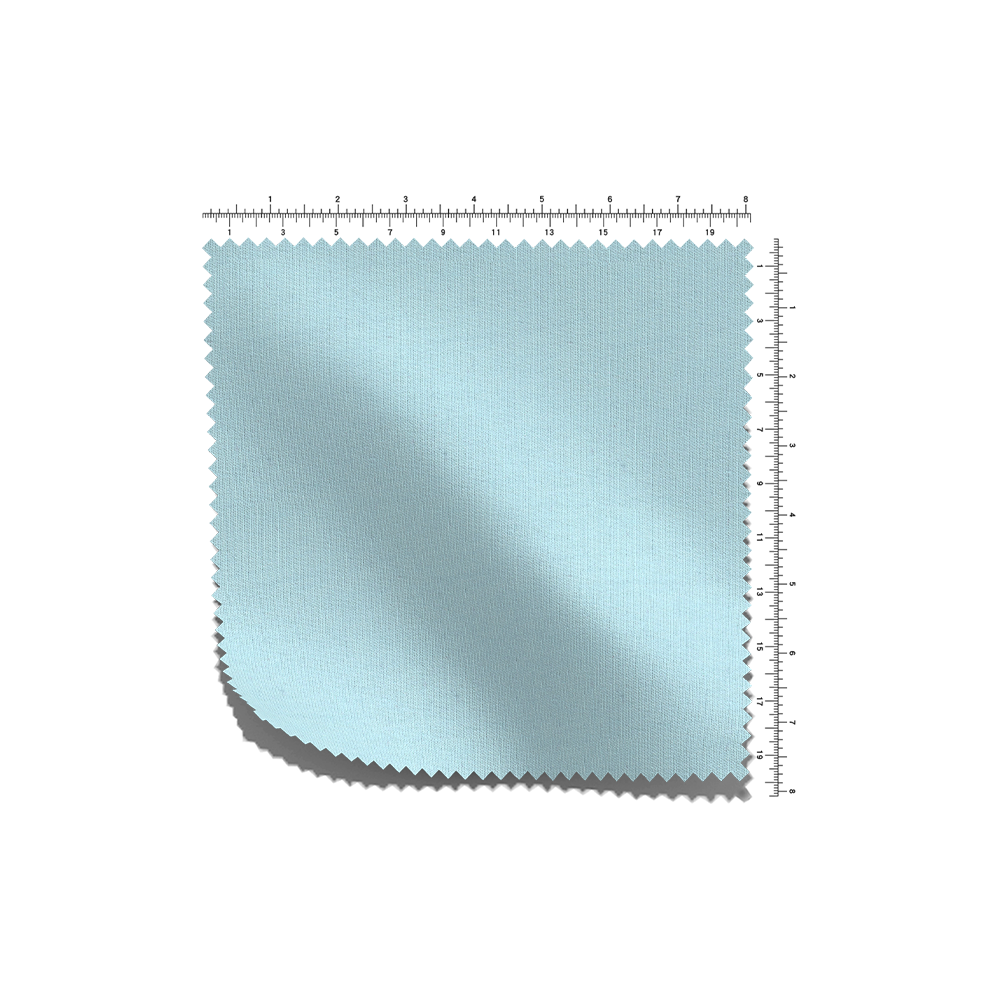
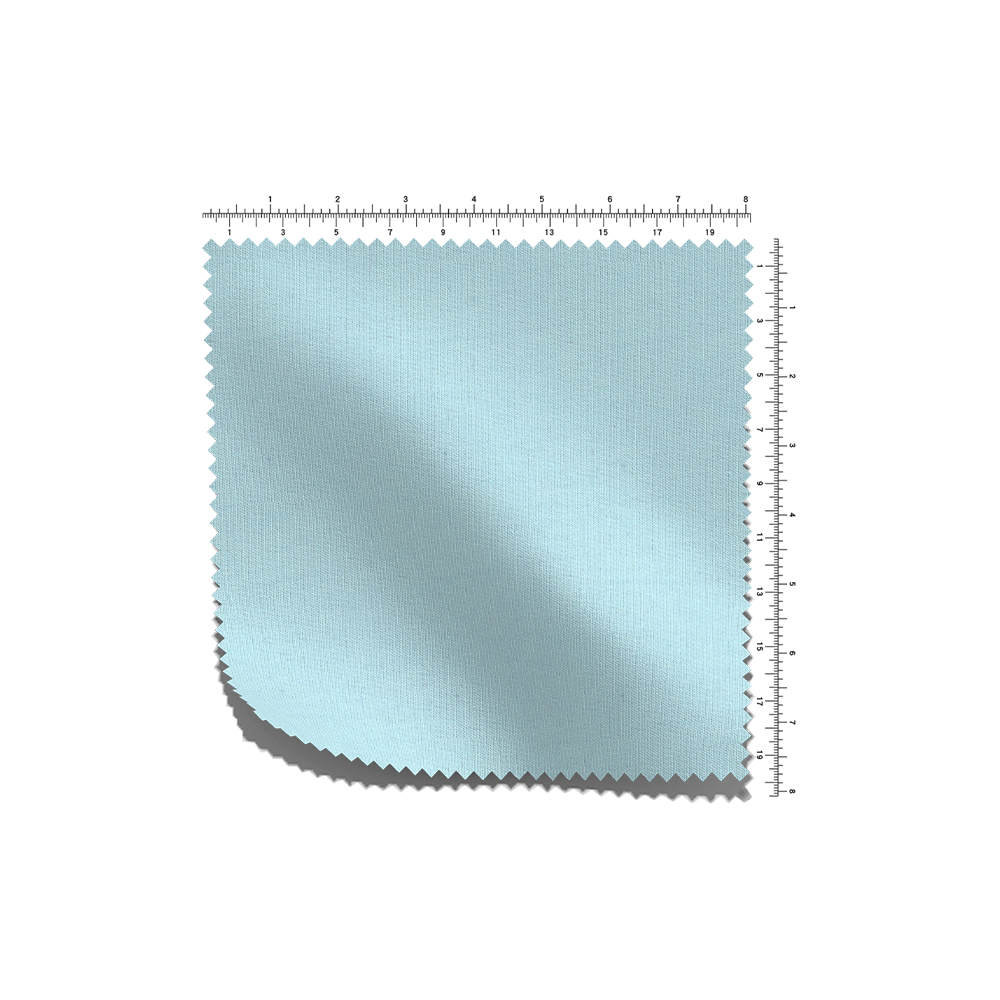 C/M/S Cooling French Terry Knit FabricA lightweight cotton/modal/spandex French terry with cooling finishing, relevant for balancing wicking structure, finish effects, and Qmax checks in hot-weather programmes.View Product →
Ask for the Qmax figure in the darkest shade of the range as well. Heavy pigment loads and black grounds can shift surface temperature enough to matter on a hot-weather programme.
Trend 2: Bio-Based and Recycled Content Is Now a Documented Requirement
Recycled polyester from bottle flake is no longer a differentiator; it is a baseline. The new demand sits in traceability and in fibre chemistry that does not rely on fossil feedstock. Buyers now ask for chain-of-custody records, not just a percentage, and that changes how every batch is documented.
On the bio-based side, partially plant-derived polyester, cellulosic fibres such as Naia and Lyocell, and mineral or botanical additives including seaweed extract, aloe and Seawool appear regularly in development requests. On the recycled side, mechanically recycled cotton and regenerated cellulose blends are moving out of sample yardage into bulk programmes. The wider mechanics of that shift are covered in this review of how sustainable fabrics are reshaping textile supply chains.
Two questions separate a real programme from a story. First, is the recycled content physically segregated, or handled under a mass balance approach? Both can be legitimate, but they carry different claims and different paperwork. Second, has the finishing recipe been re-tuned for the blend? Recycled cotton takes dye differently and bio-based polyester heat-sets at a different temperature, so shrinkage, hand feel and colour must be re-confirmed on bulk rather than on a lab dip alone.
In brushed constructions the trade-off often helps the buyer: bio-based and recycled blends frequently match or beat virgin hand feel, which is why fleece and terry programmes adopt them first.
Trend 3: Warmth Is Engineered Through Structure, Not Added Weight
Gram weight alone no longer predicts warmth. Two brushed double knits at 280 gsm can differ by twenty to thirty percent in heat retention, because loft, trapped air and infrared behaviour differ. Compare heat retention rate and thermal resistance instead of gsm, using references such as the heat retention test under GB/T 11048 and thermal resistance measured on a guarded hot plate under ISO 11092 or ASTM D1518.
Structure does the heavy lifting. Air-layer and spacer knits trap still air between two faces, brushed double knits raise loft, and coral fleece adds surface pile. Additives such as graphene and ceramic far-infrared particles raise perceived warmth in a lighter fabric, but they carry conditions: a graphene yarn usually pushes the base shade darker, which constrains pale colour ranges, and it matters whether the additive is spun into the yarn or applied as a coating, because only the first survives repeated laundering.
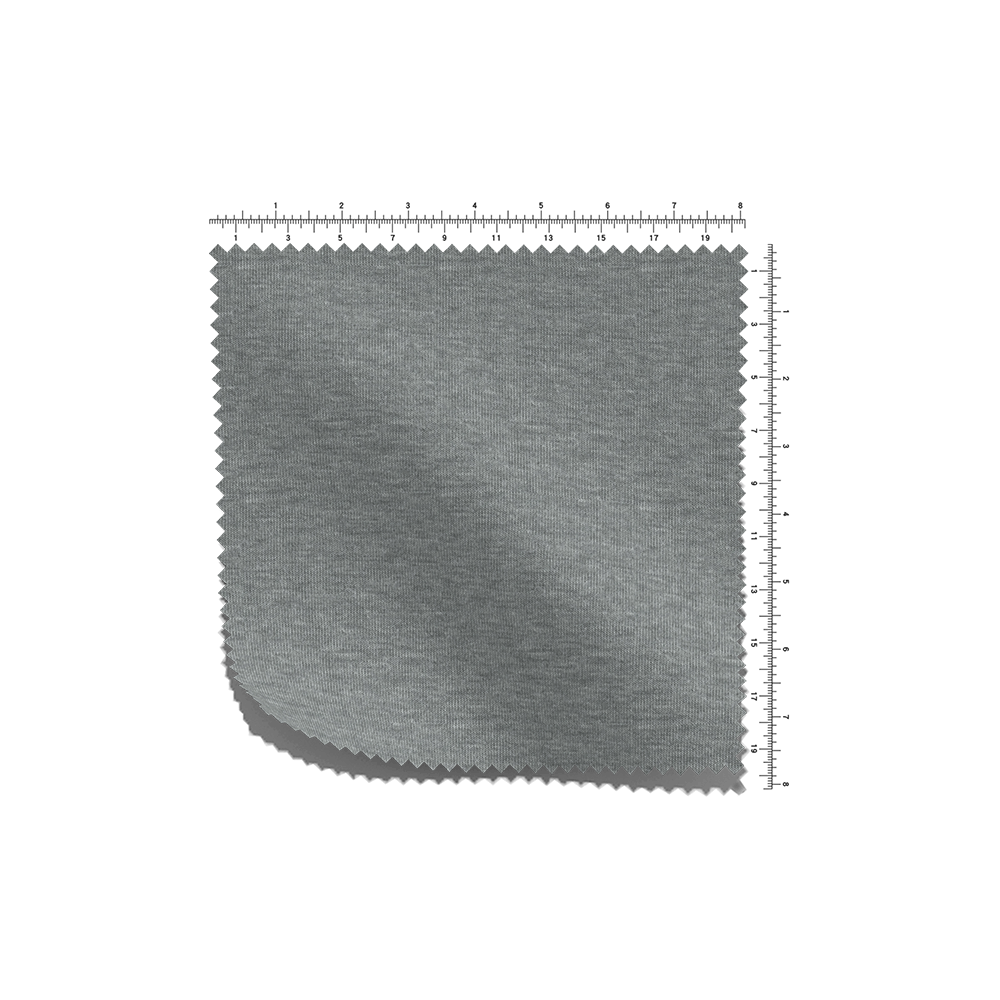 C/T Graphene Air-layer Thermal Knit FabricA cotton/polyester air-layer knit using graphene fiber for warmth retention, suited to winter layering evaluations where weight, colour fastness, and pilling are compared.View Product →
For a winter layering programme, compare candidates at equal weight using one test method, then check colour fastness and pilling on the warming face.
Trend 4: Hygiene, UV and Anti-Static Are Sold as One Substrate
Garment makers increasingly want one knit doing several protection jobs, because each additional fabric layer adds weight, cost and cutting operations. Antibacterial, antimite and odour-control knits, UV constructions and anti-static terries are the combinations we are asked to engineer most often.
Antibacterial performance is normally quantified against named strains using ISO 20743 or AATCC 100. Odour control is a different claim: a fabric can reduce bacterial counts and still hold odour molecules, so if freshness is the marketing promise, ask for an odour-specific evaluation rather than an antibacterial report alone.
UV protection is specified as a UPF rating and should be tested on wet and stretched samples, since stretch alone can lower protection noticeably. Anti-static behaviour is expressed through surface resistivity and charge decay time, and both degrade once a finish is washed out.
The engineering risk is competition on the same surface. Softeners block wicking, some antibacterial treatments interfere with UV additives, and every extra wet process consumes energy and adds a failure point. Decide which function is non-negotiable, then let the mill sequence the rest.
Trend 5: Every Surface Finish Must Now Work Without PFAS
Water repellency is the trend with the hardest regulatory edge. Restriction proposals in the EU and legislation in several US states have pushed brands to require fluorine-free, often called C0, durable water repellent finishes on outerwear knits.
The honest trade-off: fluorine-free repellents typically start lower on spray rating and lose performance faster, particularly when a softener shares the same finishing bath. Workable routes include a higher add-on with a properly controlled curing profile, a re-application step, or shifting part of the water resistance into a film coating or lamination. For waterproof claims, hydrostatic head under ISO 811 and breathability expressed as RET or moisture vapour transmission rate are the numbers to compare.
Surface differentiation is the second half of this trend. Embossing, foil print, flocking, sand wash and digital print give functional knits a fashion identity without adding layers, and small-lot digital printing suits capsule ranges better than long rotary repeats.
What to Verify Before You Commit to Bulk
A trend only becomes a purchase when it is written into a specification. The table below lists the test routes we see most often, the clause that keeps a claim honest, and where submissions usually break down.
| Function | Common test route | What to specify | Where claims usually fail |
|---|---|---|---|
| Touch cooling | Contact-cool Qmax method | Minimum Qmax on finished, washed fabric | Softener and silicone finishes lower the reading |
| Wicking and quick dry | Moisture management and absorption | Spread time and drying time at an agreed wash cycle | Stain-release or repellent finishes block absorption |
| Warmth | Heat retention rate, thermal resistance | Value per unit weight at the target gsm | Additive fades in dark shades; loft collapses after washing |
| Antibacterial and odour | Quantitative antibacterial test | Log reduction for named strains | Bacteria handled, odour chemistry not |
| UV protection | UPF method on wet, stretched samples | UPF rating with a wet and stretch statement | UPF falls sharply when the fabric is wet or stretched |
| Water repellency | Spray rating and hydrostatic head | Rating after 20 washes, plus mm H2O for waterproofing | Fluorine-free finish under-dosed or stripped by softener |
| Anti-static | Surface resistivity, charge decay | Resistivity band and decay time | Finish removed by repeated laundering |
Questions Buyers Ask Most
Q1: What is the biggest change in functional fabric trends for 2026-2027?
The move from single-function claims to one substrate carrying several verified functions. Buyers now want cooling plus wicking, or warmth plus antibacterial, documented on the finished fabric after a defined wash cycle rather than assembled from separate fabrics in the garment.
Q2: Are PFAS-free water repellents as durable as older fluorocarbon finishes?
Not exactly. Fluorine-free finishes typically start lower on spray rating and lose performance faster, especially when a softener is applied in the same bath. The practical answers are a higher add-on with a controlled curing profile, a re-application step, or moving part of the water resistance into a film coating or lamination.
Q3: Do recycled or bio-based yarns perform worse than virgin fibres?
They behave differently rather than worse. Dye uptake, shrinkage and pilling can shift, and blends need the finishing recipe re-tuned. On brushed constructions such as fleece, bio-based and recycled blends often match or beat virgin hand feel, which is why those ranges adopt them first.
Q4: How can I tell whether a function sits in the yarn or only in the finish?
Run a washing trial and retest. Yarn-level functions such as modified cross-section wicking, far-infrared additives spun into the filament or inherently antibacterial fibres keep most of their value; topical finishes fade with each cycle. Asking for the finishing recipe and the additive route is faster than guessing from a test report.
Where This Leaves Buyers for the Next Buying Cycle
Trends in functional fabrics are no longer decided by which additive is newest. They are decided by whether performance can be repeated, measured and documented after washing, and whether the fibre story survives a chain-of-custody audit. That is a specification question first and a marketing question second.
We are a knitting manufacturer with dyeing, printing and garment making inside the same group, working across functional, fashion and sustainable knits. When a brief mixes structure, function and finish in a single fabric, that combination is usually where the useful conversation starts.
LATEST POST
Let’s create something amazing together
contact us
Don't hesitate to contact when you need us!

Step Ahead.
Nearly 30 years of experience in the textile industry is a valuable advantage of Golden Morning. Welcome to communicate with our team!
Become a Client
 +86-512-52528088
 +86-512-14546515
-
 [email protected]
[email protected] -

Company Address:
NO.218 QingDunTang Road changshu CityJiangsu Province(215500), ChinaFactory Address:
NO.19 Fuchunjiang East Road Southeast Economic Development Zone Changshu Jiangsu, China
