


 English
 한국어
 中文简体


Anti-Mite Fabric Applications: From Bedding to Apparel & How to Choose
A product developer asked us a direct question recently: after switching a bedding collection to fabric labeled "anti-mite," why did customer complaints about dust mites barely drop? The short answer: the fabric was specified for the wrong application. Anti-mite performance is not a single property that a finish can add at the last step. It depends on the yarn, the knit structure, the treatment route, and — most importantly — the environment where that fabric will actually be used.
An anti-mite fabric is an engineering choice, not a label. When the application is defined first, the rest of the specification becomes much easier to get right.
Dust mites are microscopic arachnids that thrive wherever warmth, humidity, and shed skin cells collect — mattresses, pillows, quilts, upholstered sofas, and carpets. The World Health Organization ranks allergic diseases among the most serious chronic health conditions globally, and dust-mite allergens are a leading trigger for allergic rhinitis, dermatitis, and asthma. This makes anti-mite fabric applications a health-related decision, not just a product feature.
Where Anti-Mite Fabrics Are Actually Used
Anti-mite fabrics today go far beyond the classic mattress protector. From a textile supplier's perspective, the market splits into four main application areas with different performance priorities.
| Application area | Typical end products | Key fabric priorities |
|---|---|---|
| Bedding and sleep products | Mattress protectors, pillow covers, duvet encasings, fitted sheets | Stable knit structure, wash durability, skin safety |
| Upholstery and home textiles | Sofa covers, cushion covers, curtains, seat covers | Abrasion resistance, dimensional stability, easy care |
| Apparel and intimate wear | Sleepwear, loungewear, socks, children's clothing | Softness, breathability, stretch recovery, comfort |
| Hospitality and institutional textiles | Hotel bedding, healthcare textiles, waiting-area seating | Compliance with institutional standards, industrial laundering tolerance |
BeddingUpholsteryApparelInstitutional — each environment changes the technical priorities.
Bedding is the highest-risk environment because body heat and night-time perspiration create ideal breeding conditions. Industry data cited in textile literature estimates that more than 80 percent of dust mites found in a home are concentrated in the fillings of quilts, pillows, and mattresses. This is why the earliest anti-mite treatments were developed for home textiles.
Apparel is the fastest-growing application, especially sleepwear and children's clothing, where the fabric stays in prolonged skin contact. For bedding lines, a stable interlock structure is a common choice: it resists distortion during repeated laundering and provides a denser barrier than an open single jersey. Suppliers that serve this segment usually offer anti-mite interlock constructions that have been tested after several wash cycles.
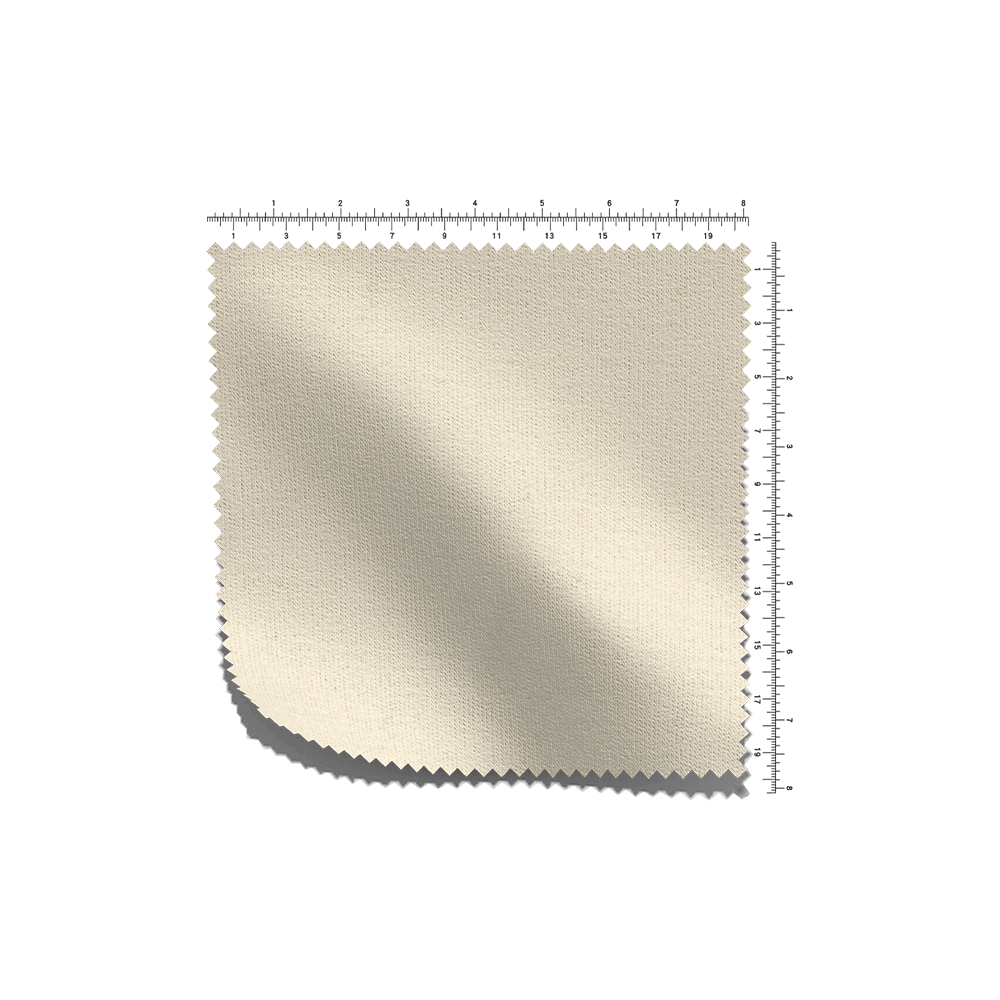 R/T/A/S Anti-Bacterial Anti-Mite Interlock FabricThis interlock knit combines cotton, polyester, acrylic, and spandex with gold-based resistance and brushing for softness. It suits baby clothing and close-fitting wear, offering durable barrier performance for bedding and sleepwear.View Product →
How Anti-Mite Protection Works in Fabric
The mechanism determines how durable, how safe, and how suitable a fabric is for a given application. In industrial practice, three routes are used — often in combination.
Physical barrier
A tightly constructed fabric prevents dust mites and allergen particles from passing through to the skin or from escaping the filling behind the cover. Barrier performance is related to pore size, thickness, and the number of layers. JIS L 1920, the Japanese standard for testing the efficacy of fabrics against mites, is widely referenced for this kind of evaluation.
Acaricide or repellent finishing
Chemical treatments apply an anti-mite active substance to the fabric surface. Published laboratory data on treated polyester fiberfill shows 95 percent mite mortality after eight days and 100 percent after four weeks, with efficacy still confirmed after ten washes at 60 degrees Celsius. The active substance must be non-toxic for its intended contact level, which is why skin-safety and regulatory documentation matter as much as the efficacy numbers.
Fiber-level integration
In this route, the active agent is incorporated during fiber production, making the protection part of the yarn itself. This approach tends to survive laundering better than a surface finish, but it usually requires larger minimum quantities and a longer development cycle.
Knit structure and mechanism interact. For apparel applications, a lightweight single jersey with fiber-integrated or durable finishing gives a good balance of protection and breathability. For bedding, the more substantial double-knit or interlock structure adds barrier performance. Understanding how single jersey and double-knit structures differ helps in matching the construction to the end product.
 C/S Anti-Bacterial Anti-Mite Single Jersey FabricA lightweight cotton-spandex single jersey treated with Silvadur antimicrobial and anti-mite agents, plus an enzyme finish. It provides breathable, stretchy protection for underwear, loungewear, and children's apparel.View Product →
Key Performance Criteria and Test Methods
Never accept an anti-mite claim on the basis of a single lab sheet. Three data points must be checked: the test standard, the number of washing cycles, and the safety status of the active substance.
| Criteria | What it tells you | What to look for |
|---|---|---|
| Efficacy standard | How mite mortality or barrier effect is measured | Test method named, e.g., JIS L 1920 |
| Wash durability | Retention of protection after laundering | Number of washes and wash temperature |
| Skin safety | Irritation and sensitization risk | Non-toxicity data for skin-contact use |
| Regulatory status | Legal approval of the active substance | Allowed in your target export markets |
| Barrier-related structure | Whether the knit itself blocks allergen passage | GSM, density, and layer structure of the fabric |
Note that results obtained under different standards are not directly comparable. Always ask which standard was used and under what conditions the test fabric was laundered.
How to Choose an Anti-Mite Fabric for Your Product
Start with the end use, not with the chemical finish. The selection process below is the one our textile engineers use when a customer brings a new anti-mite product brief.
- Define the target: is the goal allergen reduction in a room, protection of a mattress, or skin-contact protection in clothing?
- Match the knit structure to the application: interlock or double-knit for bedding, single jersey for apparel, higher GSM for barrier-heavy requirements.
- Confirm the protection route: surface finish, fiber-integrated agent, or a combination. Each has a different durability and cost profile.
- Verify compliance documentation: the active substance must be approved in the markets where your product will be sold.
- Ask for reproducibility: batch-level test reports, not a single sample certificate, and a stable specification across production runs.
When softness and skin comfort dominate the product brief, a super-soft single jersey with anti-mite finishing offers the balance most sleepwear and children's-wear brands are looking for.
 C/S Anti-Bacterial Super Soft Single Jersey FabricThis double-brushed jersey uses Superlas antibacterial spandex to deliver a 3A-grade antibacterial effect after 50 washes. Its soft, breathable cotton-spandex blend is ideal for children's clothing, underwear, and loungewear.View Product →
Why a Vertically Integrated Mill Makes a Difference
Anti-mite fabric is process-sensitive. The same yarn and the same active agent can perform differently depending on dyeing temperature, after-treatment, and whether the functional chemistry survives the full finishing line. If each production stage is handled by a different subcontractor, the responsibility for the final anti-mite result becomes fragmented.
At Jiangsu Golden Morning Knitting, we control knitting, dyeing, printing, and garment-making within one facility. This allows us to verify the anti-mite function on the finished fabric rather than assume it from a raw-material certificate. Our engineering team can provide wash-cycle data and batch-level test reports before a bulk order is placed. With an annual capacity of around 30,000 tons of fabric and exports to more than 50 countries, we are used to turning application requirements into reproducible specifications — from bedding constructions to lightweight apparel knits. You can review the full scope of our manufacturing setup and product range.
Frequently Asked Questions
Q1: What is anti-mite fabric?
An anti-mite fabric is a textile engineered to reduce dust-mite populations or to block allergen particles, using a physical barrier, a chemical treatment, fiber-level integration, or a combination of these approaches.
Q2: How long does anti-mite protection last?
Durability depends on the route. Fiber-integrated treatments generally survive more launderings than surface finishes. Always ask the supplier to state efficacy after a defined number of wash cycles, for example ten washes at 40 or 60 degrees Celsius.
Q3: Is anti-mite fabric safe for children's clothing?
It is safe only when the active substance is approved for skin contact in the target market. Request irritation and sensitization data, and confirm that the finished fabric meets the relevant textile safety requirements.
Q4: Can the same anti-mite fabric be used for bedding and apparel?
Technically possible, but rarely optimal. Bedding benefits from denser interlock or double-knit structures, while apparel is better served by lightweight single jersey constructions. Matching the structure to the application is the most reliable way to balance protection, comfort, and cost.
Anti-mite fabric applications will keep expanding as consumers and institutions pay closer attention to indoor allergens. The brands that succeed are the ones that treat anti-mite protection as a specifiable engineering property: a defined application, a tested structure, and verified durability. If you are selecting a fabric for bedding, apparel, or institutional use, define the application first, apply the performance criteria, and let the test data guide the decision.
Don't hesitate to contact when you need us!

Step Ahead.
Nearly 30 years of experience in the textile industry is a valuable advantage of Golden Morning. Welcome to communicate with our team!
Become a Client
 +86-512-52528088
 +86-512-14546515
-
 [email protected]
[email protected] -

Company Address:
NO.218 QingDunTang Road changshu CityJiangsu Province(215500), ChinaFactory Address:
NO.19 Fuchunjiang East Road Southeast Economic Development Zone Changshu Jiangsu, China
